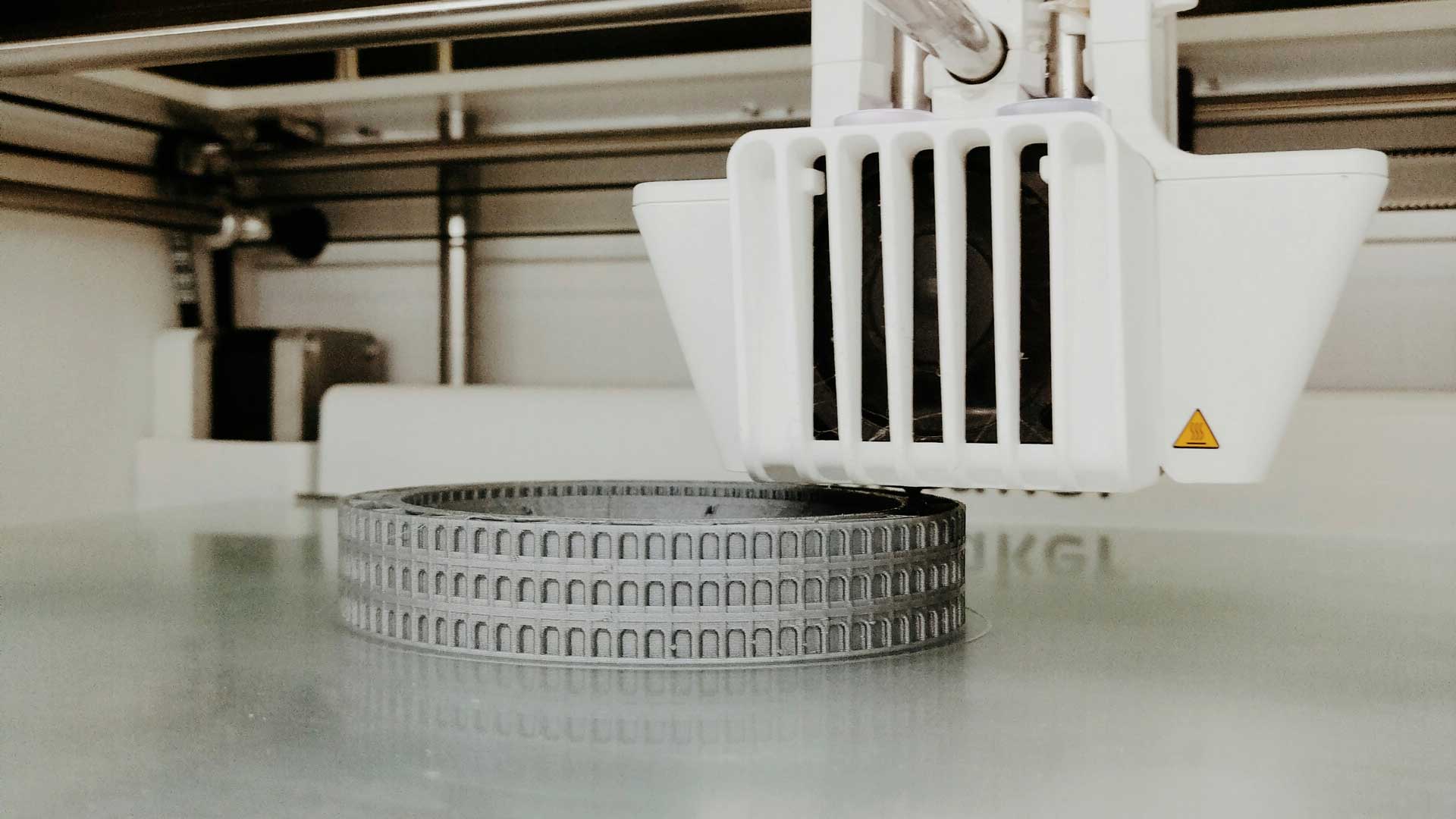
Architecture has always looked to the future, striving to anticipate needs and often pushing the boundaries of technology. Today, it continues this tradition through one of the most exciting and promising revolutions yet: 3D printing. This groundbreaking technology is already reshaping how we conceive, construct, and inhabit spaces. From lunar projects to sustainable buildings on Earth, the possibilities seem limitless.
3D Architecture, a New Paradigm in Architectural Design
3D printing isn’t just a tool for speeding up construction or cutting costs; it represents an entirely new design language. Melodie Yashar, design director at ICON—a leader in the field—explains that this technology allows architects to “rethink design itself,” breaking free from the constraints of traditional modular construction. The result? Structures that are organic, sustainable, and better suited to meet environmental and social challenges.
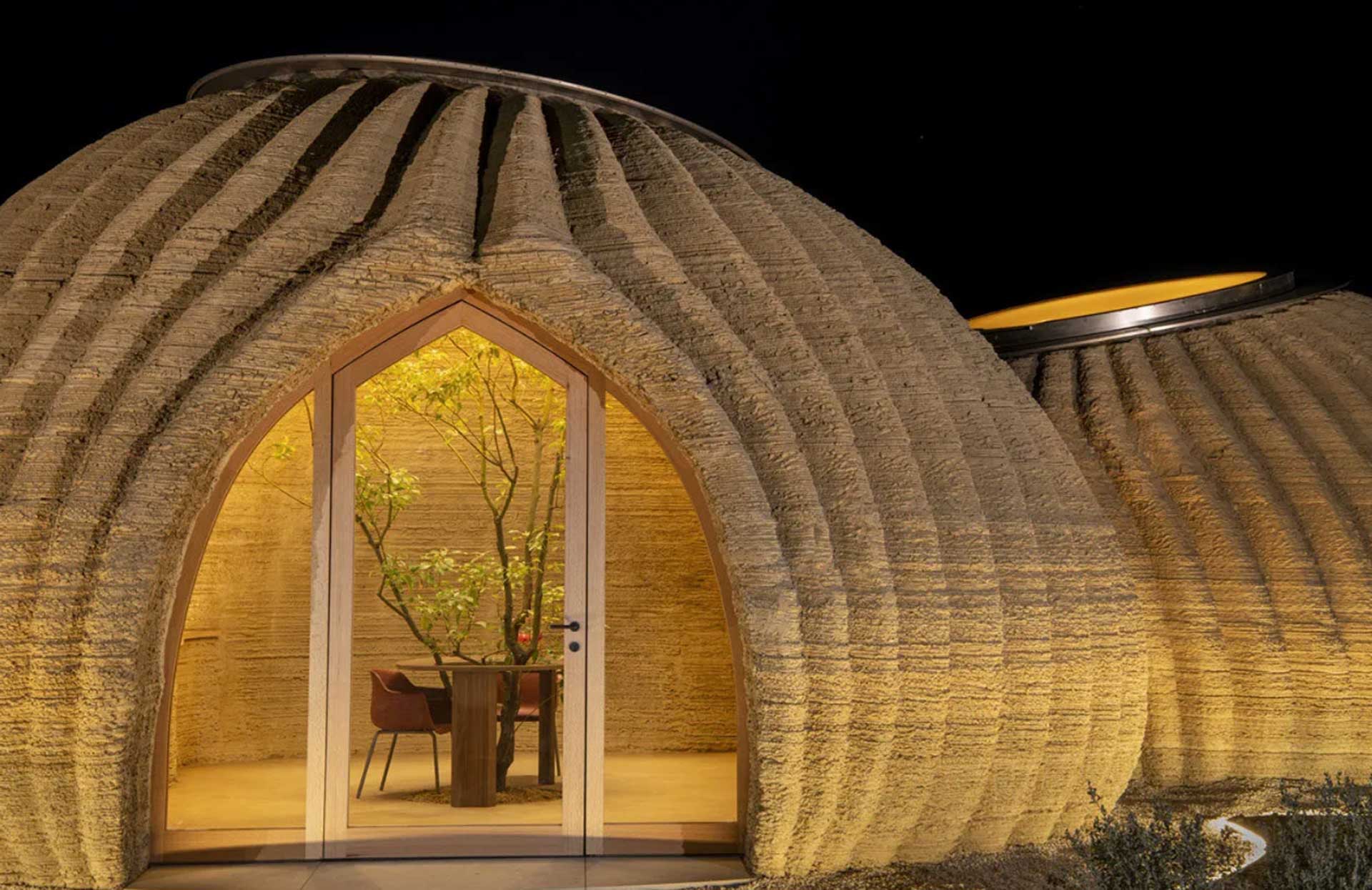
The flexibility of 3D printing makes it possible to incorporate local materials and significantly reduce environmental impact. A prime example is Tecla, the world’s first 3D-printed house made from raw earth. Built in Italy through a collaboration between Mario Cucinella Architects and WASP, this home is a tangible vision of sustainable living, marrying advanced technologies with natural resources.
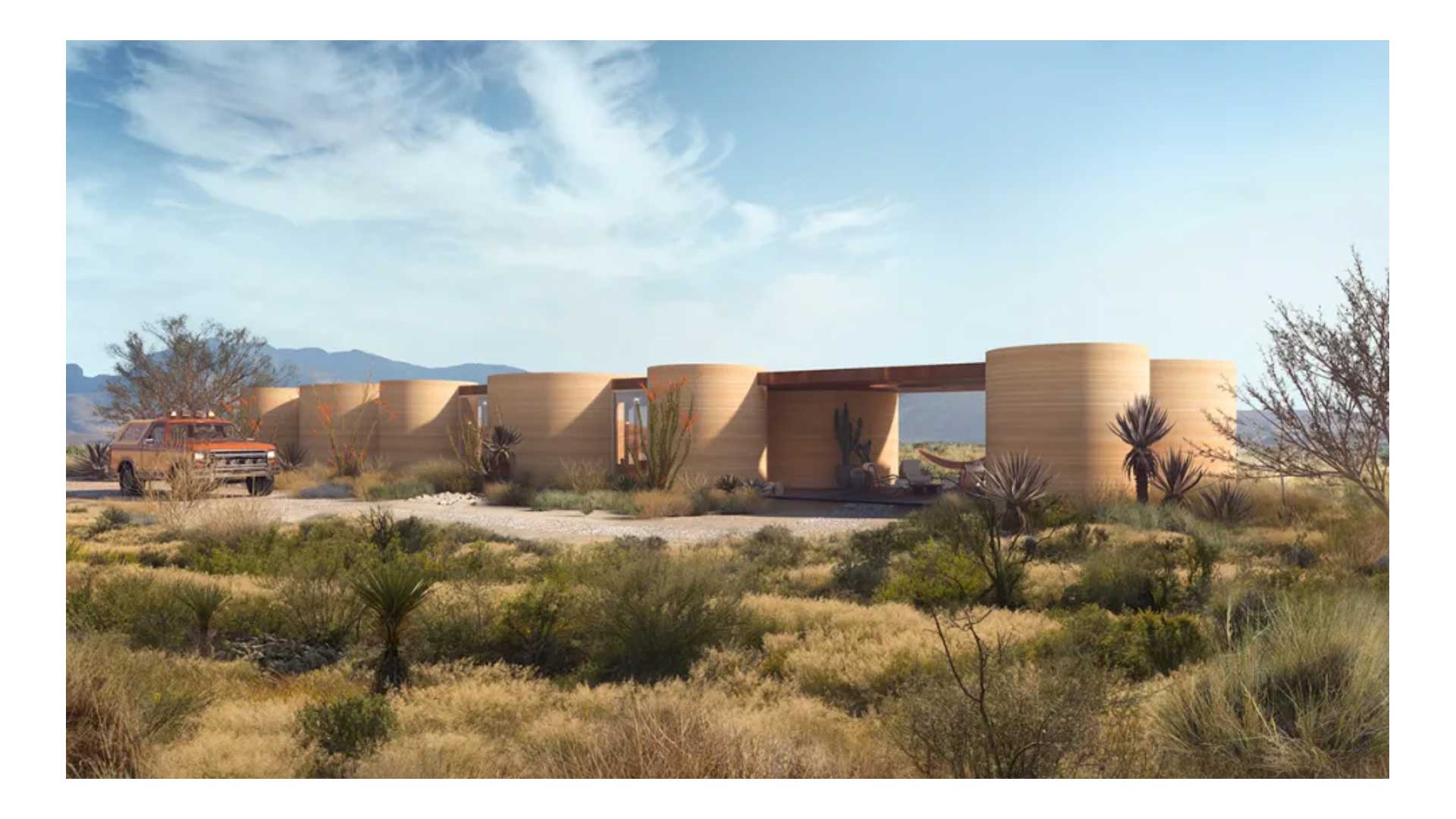
In the United States, Danish architecture firm BIG, in partnership with ICON, has pushed the boundaries of 3D-printed architecture even further with El Cosmico, a resort located in Marfa, Texas. Blending technological innovation with an artistic ethos, the resort features 3D-printed concrete structures, including accommodations and a large amphitheater for immersive community experiences.
These projects showcase a new aesthetic defined by fluid, sculptural forms—shapes that would be almost impossible to achieve using traditional construction methods due to cost and time constraints.
3D Printing and Sustainability: The Italian Case and Europe
In Italy, 3D printing has become a crucial tool for sustainable construction. Beyond Tecla, the country has played a key role in developing technologies that produce affordable housing quickly, often in response to housing crises or natural disasters. These projects demonstrate that 3D-printed architecture is no longer a futuristic utopia but a viable, functional solution to some of today’s most pressing challenges. For example, they offer a sustainable way to create low-impact housing for growing populations at a rapid pace.
In Europe, the technology has achieved a significant milestone with the completion of the largest 3D-printed building to date: a 850-square-meter office complex in Germany. Constructed using 3D-printed concrete, this project illustrates the scalability of the technology, which is no longer limited to prototypes or single-family homes.
3D Space Habitats for the Future

While 3D printing is transforming architecture on Earth, it holds even greater promise for space exploration. ICON, in collaboration with NASA, is developing lunar habitats built using 3D printing technology. These modules are designed to support the first human missions to the Moon and, eventually, Mars. On these extraterrestrial bodies, construction will rely on locally sourced materials, such as lunar regolith.
Beyond sustainability and rapid construction, 3D printing offers a range of benefits. It enables unparalleled customization, reduces waste, and optimizes energy efficiency. These innovative construction methods also provide solutions to ecological disasters, creating structures that are not only resilient but also capable of withstanding extreme climates and hostile environments.
A Visionary Future for 3D Architecture
In short, 3D architecture is one of the most captivating innovations of the 21st century. It’s not just a fleeting trend but a fundamental shift in how we design and build both residential and commercial structures. This technology allows us to imagine a future that is more inclusive, sustainable, and stylistically adventurous. As 2025 approaches, new projects will continue to push the boundaries of contemporary design, cementing 3D printing’s place at the heart of architectural innovation.