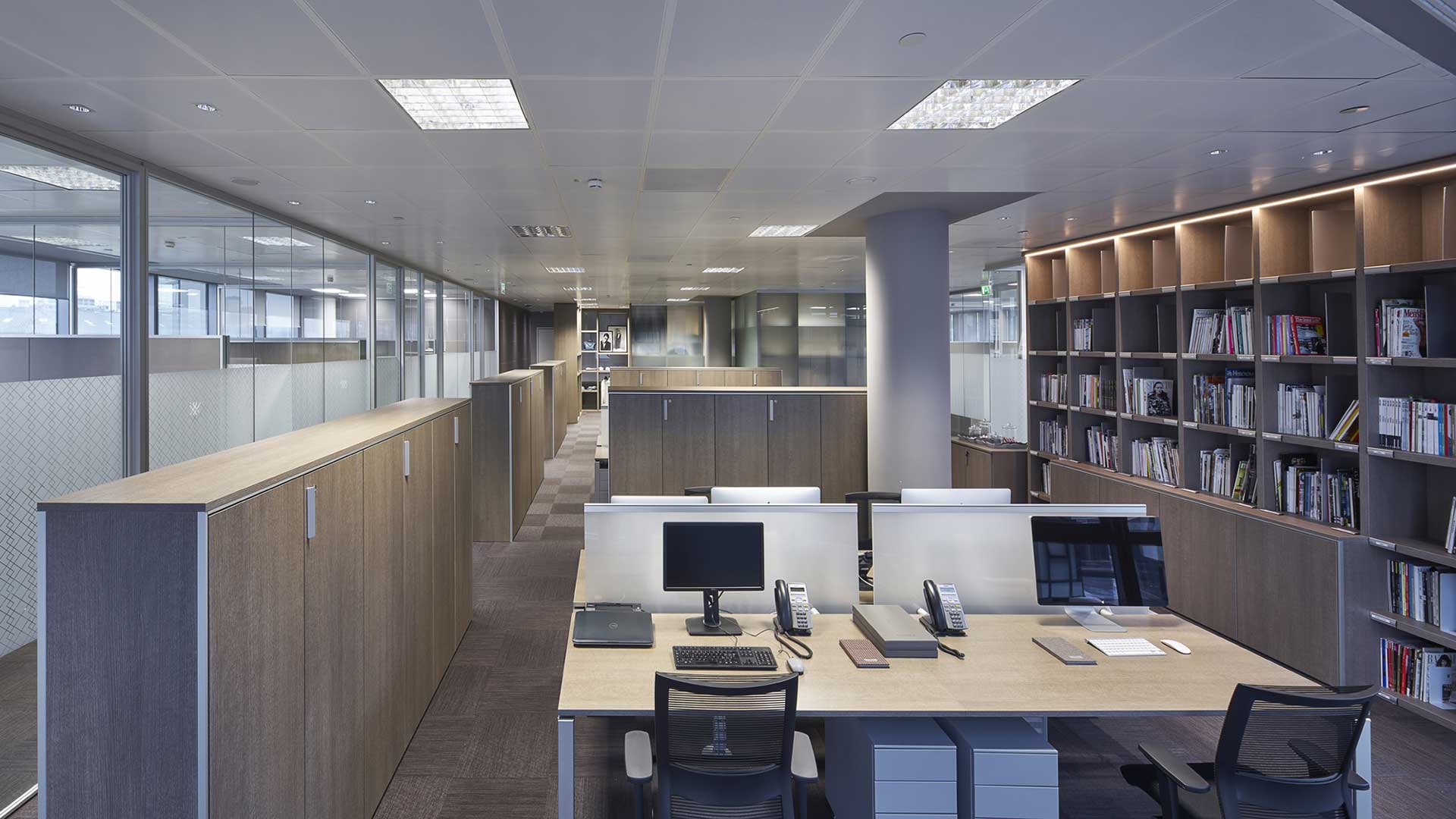
A guide to the uses of laminate panels in office spaces and their technical properties, explaining why they are such a popular choice for workplace furniture.
What is Laminated Wood?
Laminates aren’t just for flooring. Versatile and highly customizable, laminated wood shouldn’t be confused with standard melamine panels. Thanks to its superior durability (which places it in a higher price range), it’s a widely used material in both residential and commercial furniture. From desktop and meeting table surfaces to cabinet doors and bookcases, its applications are vast.
Laminated wood is supplied in large panels and is composed of multiple layers. Its core is made of HDF (high-density fiberboard) pressed under high pressure, topped with plastic sheets that provide both the decorative finish and a protective outer layer. One of the standout features of laminated wood is the almost infinite range of textures and colors available. Decorative sheets can mimic natural wood grain, complete with realistic veining, or replicate other materials like resin, stone, or concrete.
The overlay, a resin-based film, adds a protective coating that makes the material particularly resistant to external stress and moisture. It also prevents the decorative layer from fading and makes maintenance and cleaning a breeze.
Types of Laminates
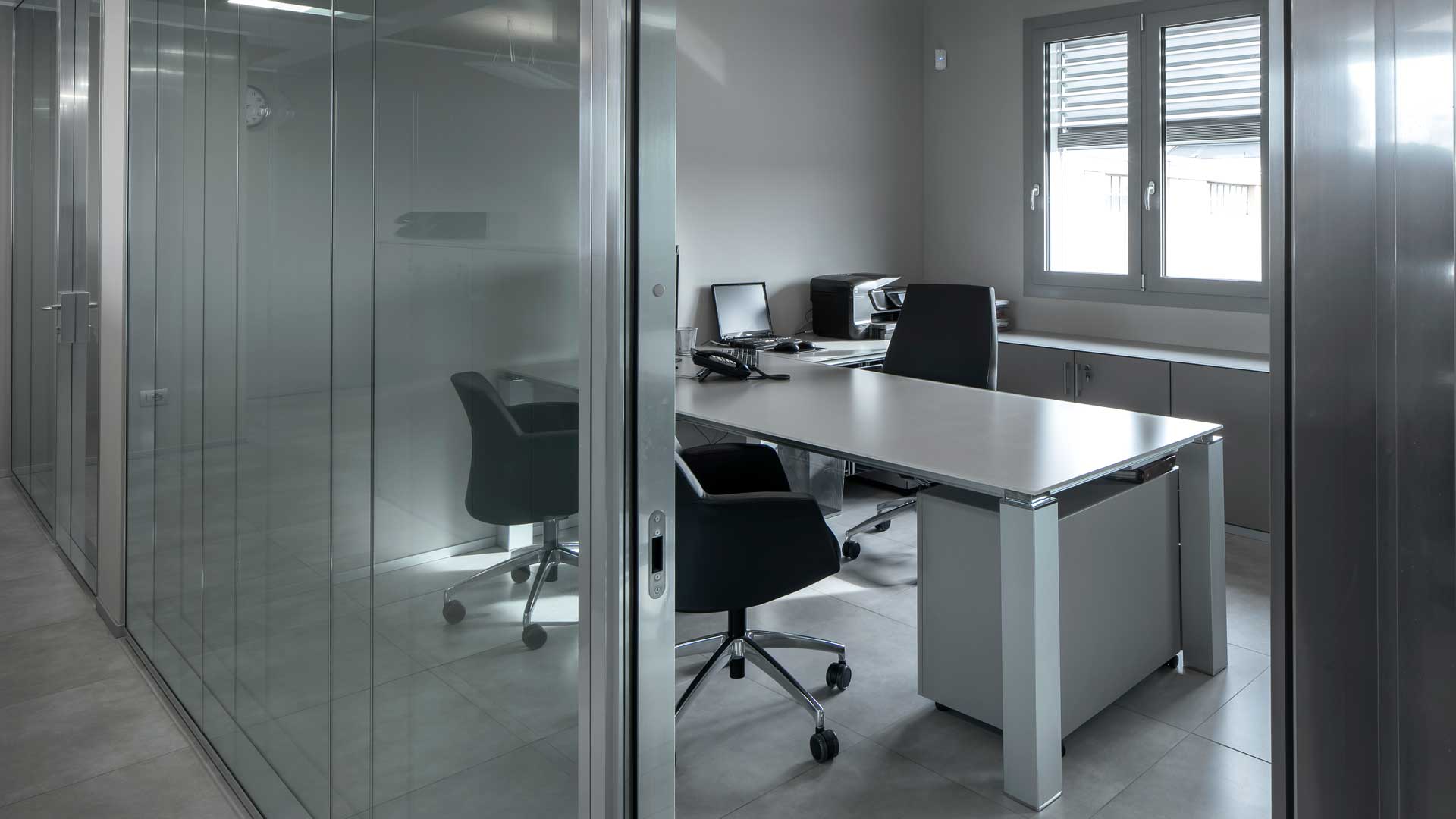
There are three primary types of laminated wood available on the market, each suited to different applications:
- HPL (High Pressure Laminate): Created by compressing three layers under high pressure and heat, HPL is exceptionally durable. It’s commonly used in high-stress environments like kitchens, bathrooms, and even for building façades.
- CPL (Continuous Pressure Laminate): Produced with a consistent but lower pressure than HPL using a roller press. CPL is widely used in office furniture for cabinets, bookcases, desktops, and meeting tables.
- CHPL (Continuous High Pressure Laminate): A next-generation laminate combining the continuous pressure of CPL with the high heat and pressure of HPL. This hybrid process results in a highly durable material that can withstand significant external stresses.
Laminates are not limited to panels. They also come in sheets used as finishes for furniture components and are available in various styles. Flexible laminates are perfect for curved surfaces, interior fixtures, cabinet doors, and PVC or MDF profiles.
What Are the Advantages of Laminates?
Laminated wood is a fantastic material for office furniture thanks to its exceptional durability. It resists impacts and scratches, making it ideal for work surfaces. It’s also highly resistant to wear and tear, ensuring a long lifespan, and it won’t fade even with prolonged sun exposure. Laminates are easy to clean and sanitize due to their resistance to moisture and water, and they can tolerate moderate heat levels without damage.
Office Applications for Laminated Wood
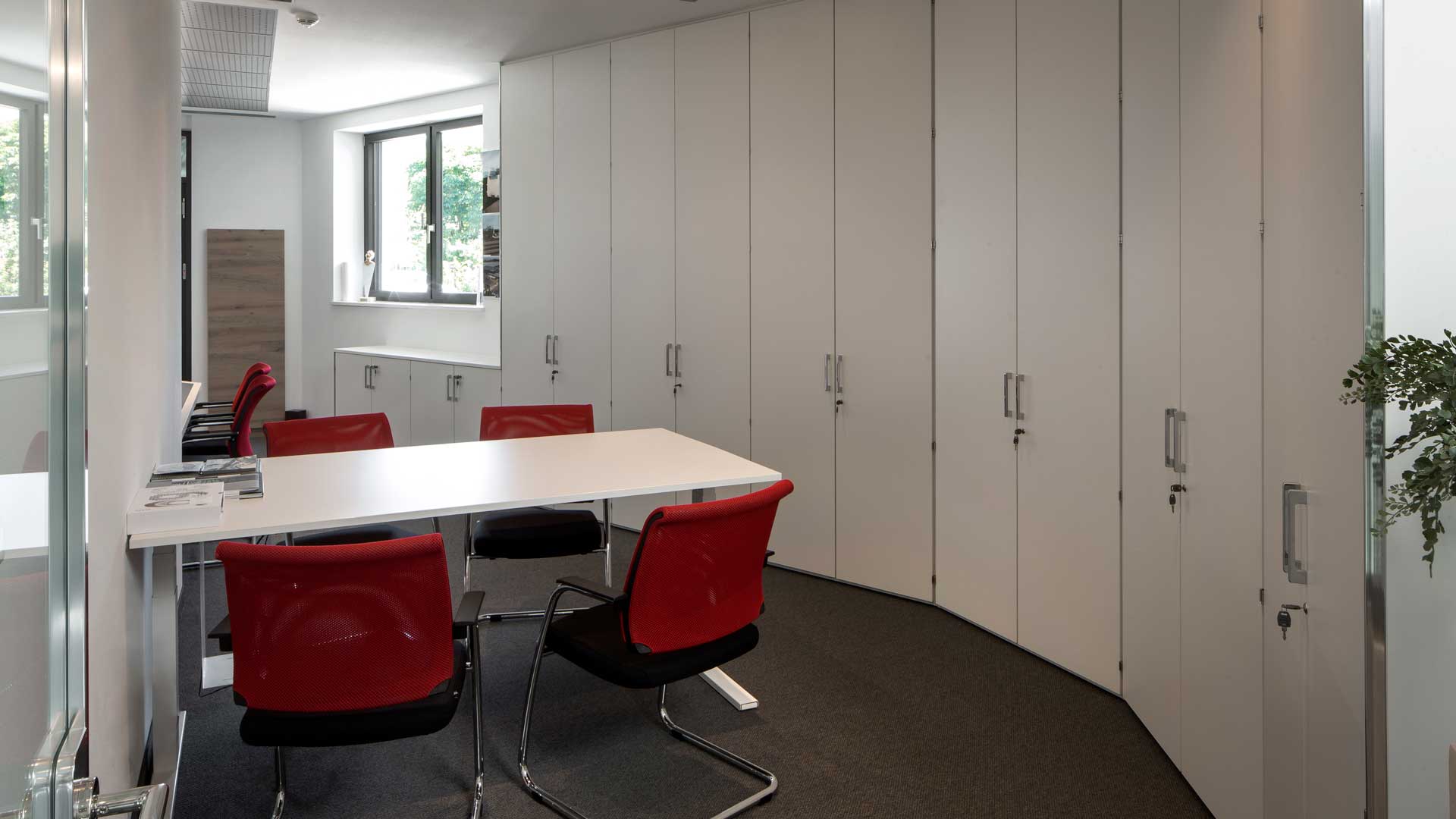
Laminated wood’s uses in office settings are nearly identical to those of melamine but with the added benefit of larger panel sizes, which can exceed the 2700 mm limit of melamine.
Common applications include:
- Meeting tables and executive desks
- Wall paneling and cladding
- Reception areas
- Kitchenettes
- Custom furniture
Customize Your Office with Level Office Landscape
Choose the most functional, high-performance, and aesthetically pleasing office materials with the help of Level Office Landscape designers. Contact them via email by filling out the form here, or call +39 039 9284831 for a personalized quote.