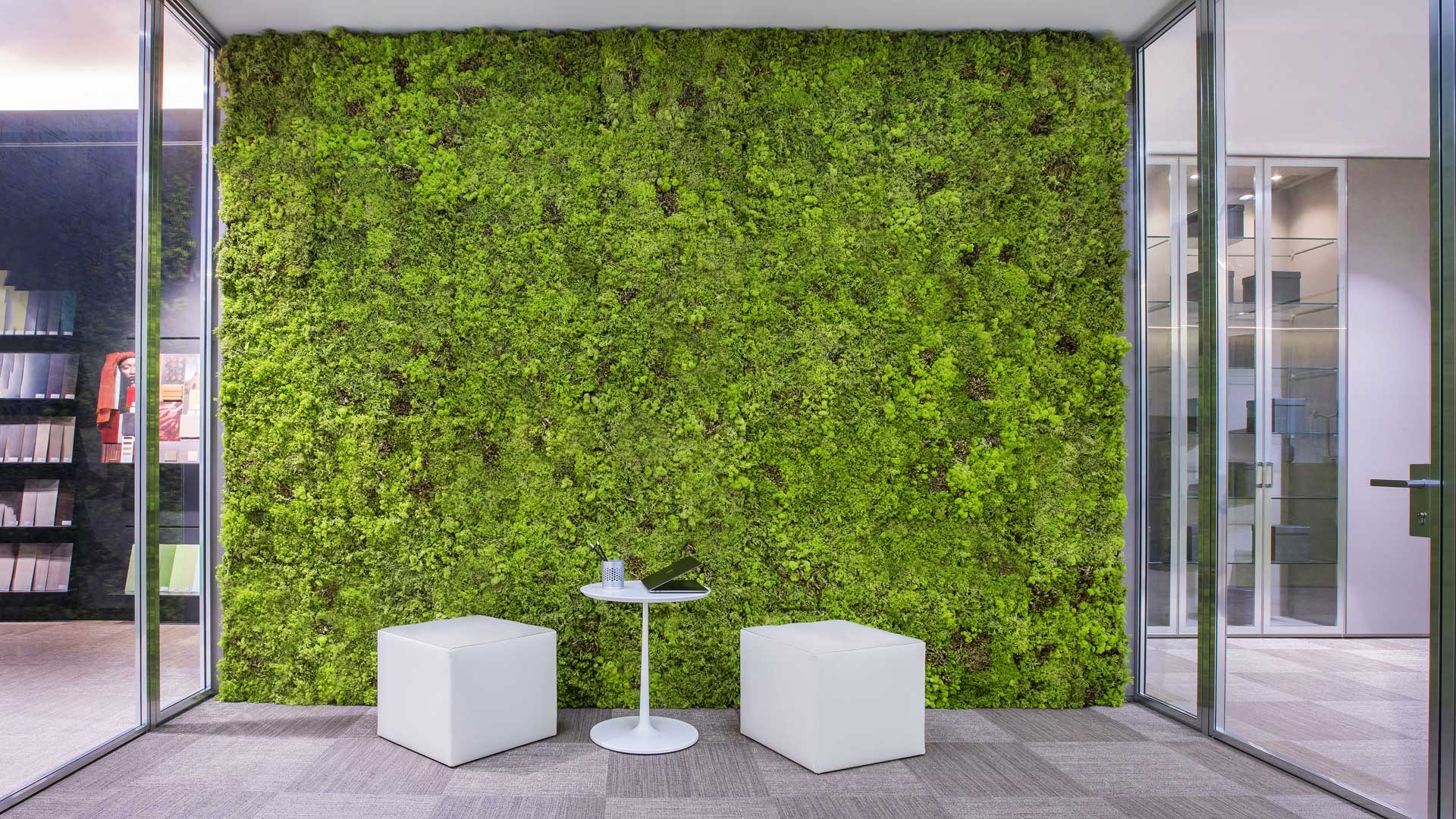
Indoor pollution has a measurable impact on employees’ health and productivity. Here are some ways technology can help improve the air we breathe at work.
What Indoor Pollution Means in the Office

It’s easy to look outside and worry about smog, but indoor pollution is one of the most common causes of health issues and stress—both at home and in the workplace. Few people realize that the air inside enclosed spaces can be more harmful than the air outdoors.
Volatile organic compounds (VOCs) released by insulation materials, adhesives, furniture finishes and cleaning products can all compromise air quality. It’s an issue that deserves close attention, especially considering how long people remain inside the office during the day and the recent emphasis on air management. Encouraging natural air exchange and relying on efficient mechanical systems has become essential to safeguard workers’ well-being and achieve a proper standard of indoor air quality.
The Main Factors That Affect Air Quality
The air inside offices, homes and closed environments can be affected by several types of pollutants. Biological agents such as mold, fungi, viruses and bacteria come first. Then there are “physical” elements, including electromagnetic fields and electrosmog. Finally, there are inorganic and chemical substances, including the VOCs mentioned earlier. The combination of these pollutants—together with the number of people in the space and their activity levels—determines the overall quality of the air in the office.
Technological Solutions
Technology offers designers concrete tools to understand when an indoor environment reaches a critical level of pollution. A first step is installing environmental monitoring systems: advanced software capable of collecting continuous data on multiple parameters. These systems track temperature, humidity and indoor air quality, detecting fine particulate matter, electrosmog and a range of airborne substances. They can even measure carbon dioxide concentration levels. With this information, it becomes possible to intervene quickly and restore healthy conditions in the workplace.
Mechanical Ventilation Systems
Once harmful substances are detected, the next step is installing controlled mechanical ventilation systems. Double-flow systems with heat recovery are particularly effective in private offices as well as open-plan environments, ensuring steady air exchange and better overall quality.
When Art Improves Air Quality

Beyond technological and mechanical solutions, some projects combine engineering with art. One example is the Exhale eco-chandelier designed by engineer Julian Melchiorri. At first glance it resembles a tree with large leaves. Featured in the collection of the Victoria and Albert Museum in London, this suspended sculpture contains 70 pockets filled with microalgae that give the piece its green hue. Inside each pocket, the algae absorb light from the LEDs and draw in carbon dioxide, triggering a photosynthesis-like process that produces oxygen.
In the coming years, more examples like Melchiorri’s are likely to emerge—projects that bridge technology and nature to improve the air we breathe at work.