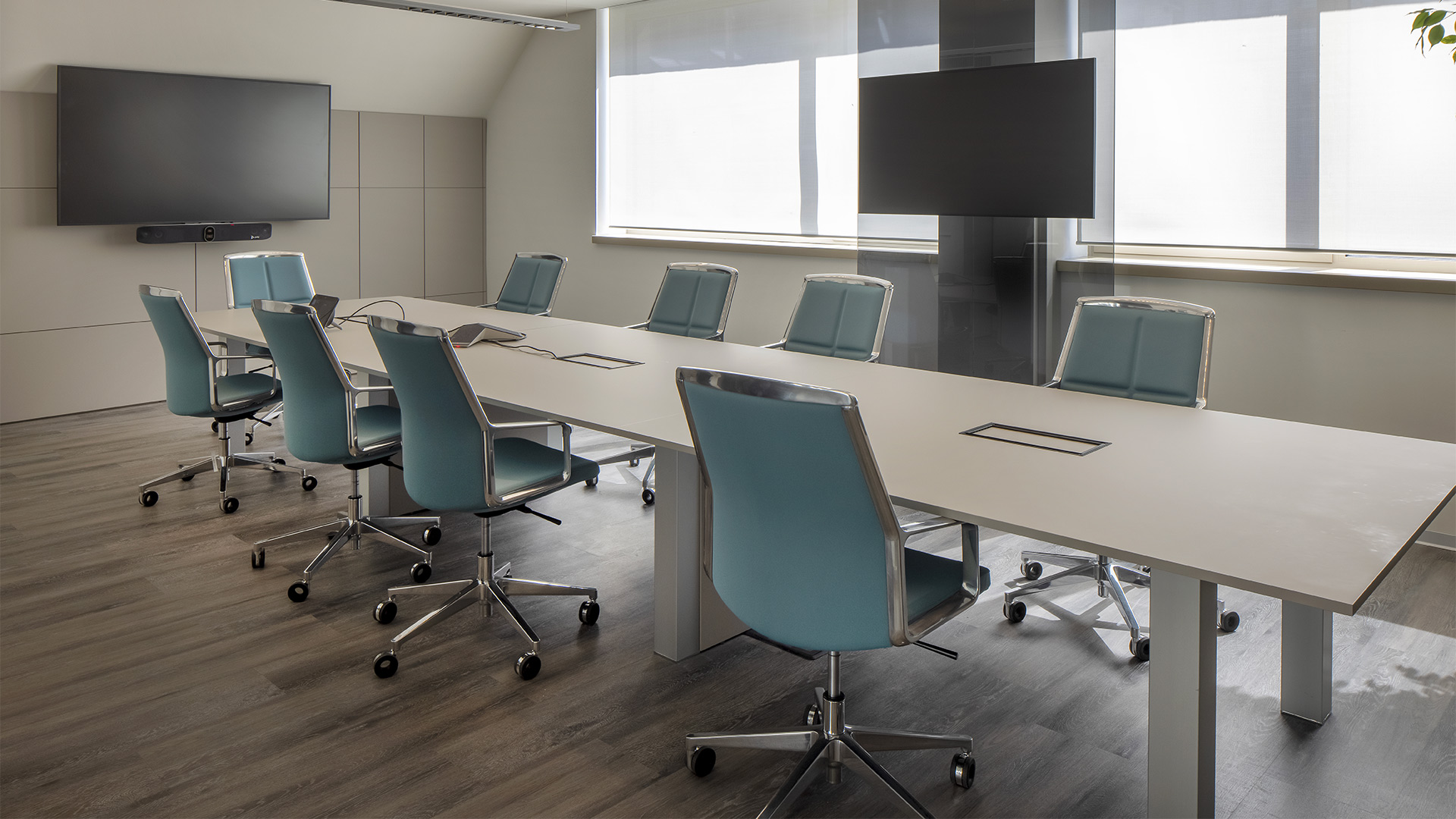
Hybrid meeting rooms perform at their best when space, acoustics and technology support one another — through balanced proportions, equipped walls, efficient partitions and furnishings that guide movement. Here are three practical layout strategies, featuring concrete solutions from the Level Office Landscape catalogue, to create meeting rooms that are more functional, comfortable and always ready for use.
Hybrid Meeting Rooms: The Future of Efficient Meetings
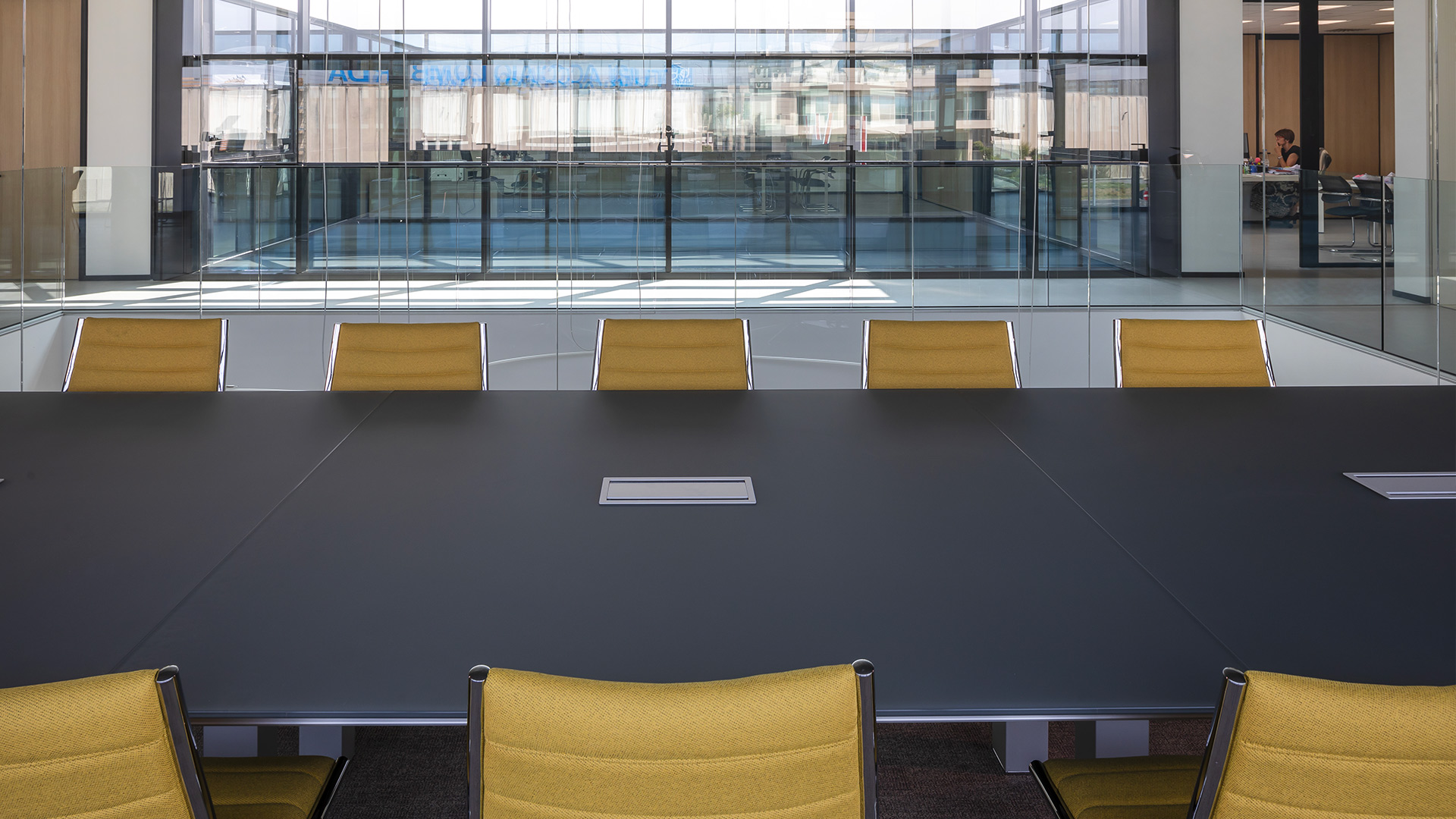
In the era of hybrid work, the meeting space must be conceived as a fluid environment — capable of hosting in-person gatherings and video conferences, accommodating cross-functional teams and enabling collaboration, focus and digital connection without friction. Designing effective hybrid meeting rooms requires rethinking layout, technology integration and furniture solutions as a cohesive system, combining design, ergonomics, acoustics and functionality through continuous dialogue.
Level Office Landscape offers a comprehensive range of solutions for hybrid meeting rooms, from partition walls to desks and fully customizable equipped walls. Below are three concrete design approaches to organize space effectively, with examples of products and configurations.
The Table as Control Hub: Clean Geometry and Visual Order
When meetings alternate between in-person and remote participation, the table becomes the central infrastructure. The optimal choice starts with a generous surface, proportioned to maintain eye contact among participants while leaving room for laptops, notes and materials. Within the Level catalogue, collections such as XL02, Artic and Flat allow meeting rooms to adopt either a more executive tone or a practical, operational character, with refined finishes and a design language aligned with representative spaces.
How to organize the space
- Screen and camera: Install the screen on a short wall and position the table to provide clean, frontal camera angles while minimizing reflections.
- Clearances: Maintain a service corridor around the table for seating and smooth circulation. The side closest to the screen can remain open to accommodate presenters standing.
- Materials: Choose matte finishes to reduce glare and fingerprints, combining wood and metal to create rhythm and visual solidity.
For greater operational comfort, the table can be complemented by a storage system that acts as backstage support for meetings. With Units, configurations can include open compartments and closed cabinets, ideal for storing materials, video kits, cables and microphones while keeping the tabletop uncluttered.
A Room That Changes Scale: Glass Partitions and Equipped Walls for Variable Density Layouts
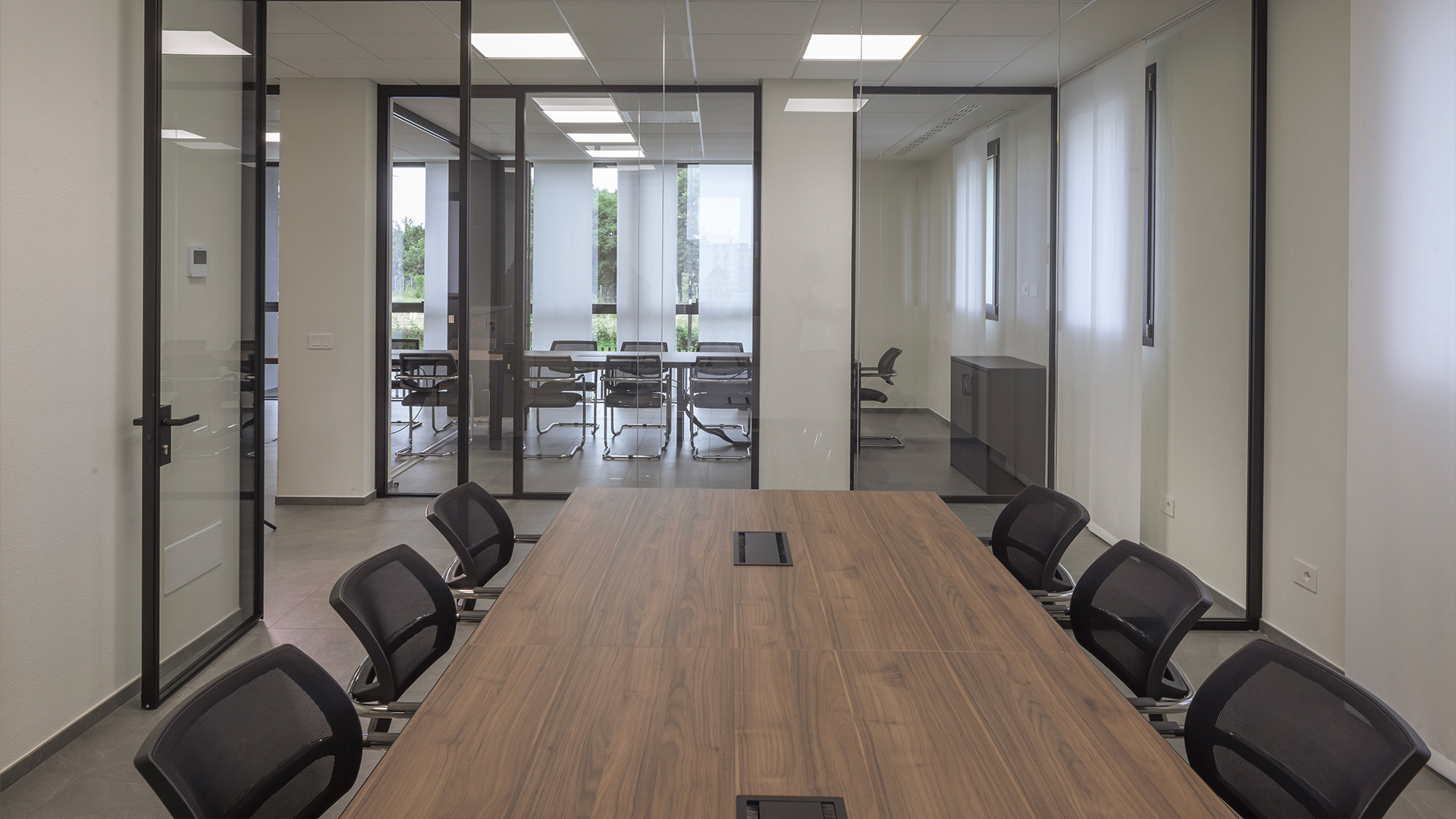
Many offices require hybrid meeting rooms that can host plenary sessions and, within the same footprint, allow parallel meetings or small-group reviews. Here, design works in layers, using movable partitions, screens and equipped walls to create depth, enhance acoustic comfort and clarify spatial hierarchy.
The glass partition systems Planet Plus and Planilux Plus define meeting and negotiation areas while preserving light and visual continuity, offering a strong architectural presence and performance suited to contemporary work environments. The second key element is an equipped wall that introduces order and services. Cross Storage integrates storage units and open modules, transforming one side of the room into an operational front with materials always within reach, writing surfaces and display space for prototypes and samples.
How to organize the space
- Meeting zone: Position the central table with seating and dedicate one technical wall to the screen and whiteboard.
- Support zone: Install Cross Storage with cabinets to store documents, equipment and presentation kits.
- Breakout zone: Create a lateral area with comfortable seating and a smaller table for quick discussions after plenary sessions.
This configuration enhances perceived quality, makes the environment more legible and reduces dispersion during meetings, as each function has a clearly defined place.
Micro-Environments for Calls and Huddle Rooms: Acoustic Comfort and Privacy with Sound-Absorbing Elements
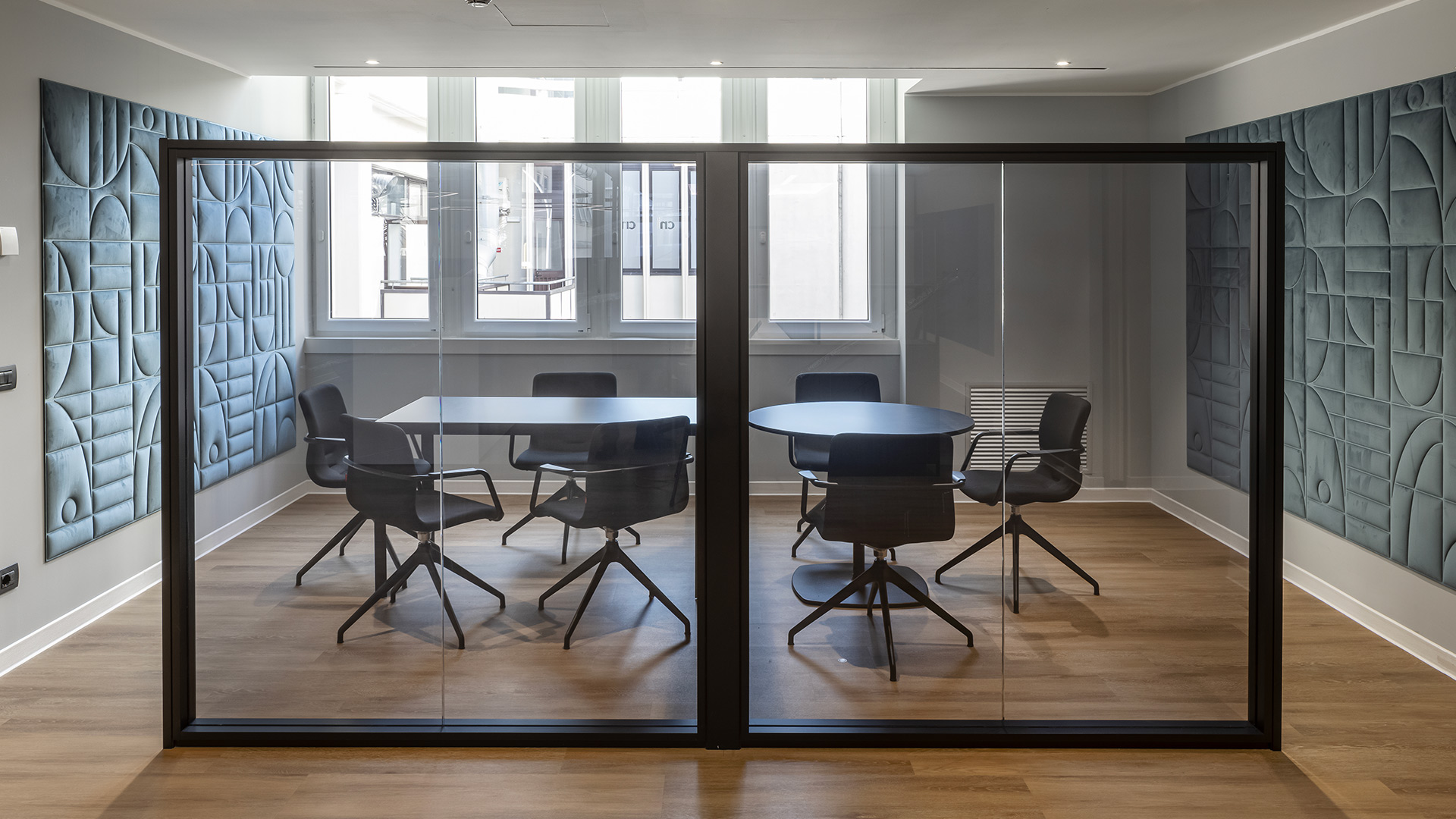
Throughout the workday, hybrid meeting rooms coexist with quick check-ins, short video calls and small-group reviews. An effective design includes complementary stations, ensuring that the main meeting room remains available for sessions that truly require a large table.
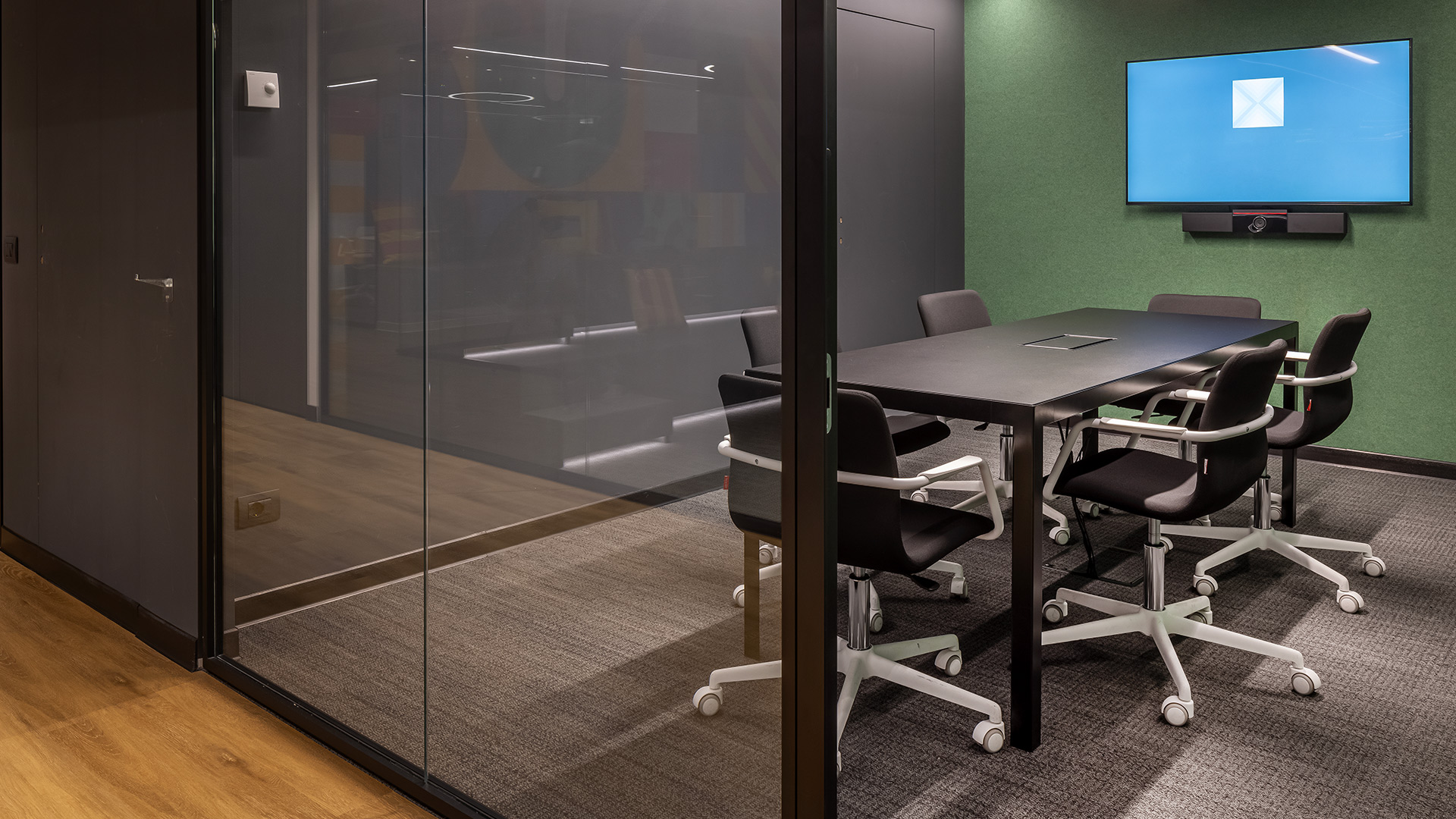
To achieve privacy and sound quality, Level offers fabric sound-absorbing divider screens that help create intimate areas and improve acoustics even within open-plan spaces. The result is a more controlled work landscape, where textile elements absorb sound while adding warmth to the environment.
How to organize the space
- Huddle room: Use a compact table, such as a smaller version from the Flat collection, combined with lateral sound-absorbing screens to ensure clearer calls.
- Smart thresholds: Use Planet Plus glass partitions to separate the meeting area from the open space while maintaining light and visual order.
In this framework, even compact spaces achieve studio-level quality: intelligible voices, orderly backgrounds and fewer distractions.
Hybrid Meeting Rooms: The Value of Thoughtful Design
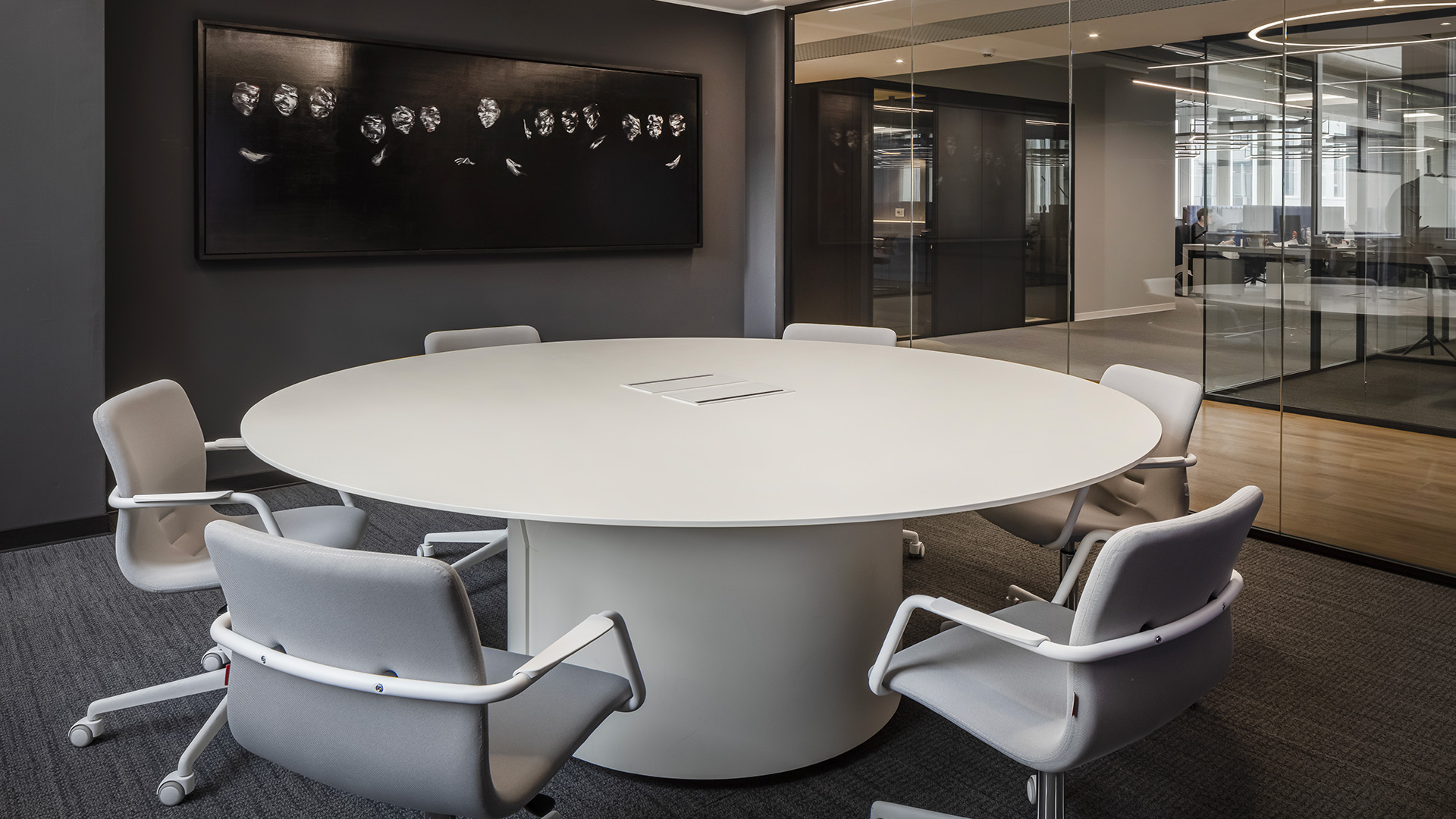
When carefully designed, hybrid meeting rooms become intuitive to use. A table that anchors the space, partitions that organize light and sound, equipped surfaces that free up worktops and micro-environments that absorb routine calls all contribute to a cohesive system.
With contemporary solutions from Level Office Landscape, layout stops reacting to needs and begins to shape them.