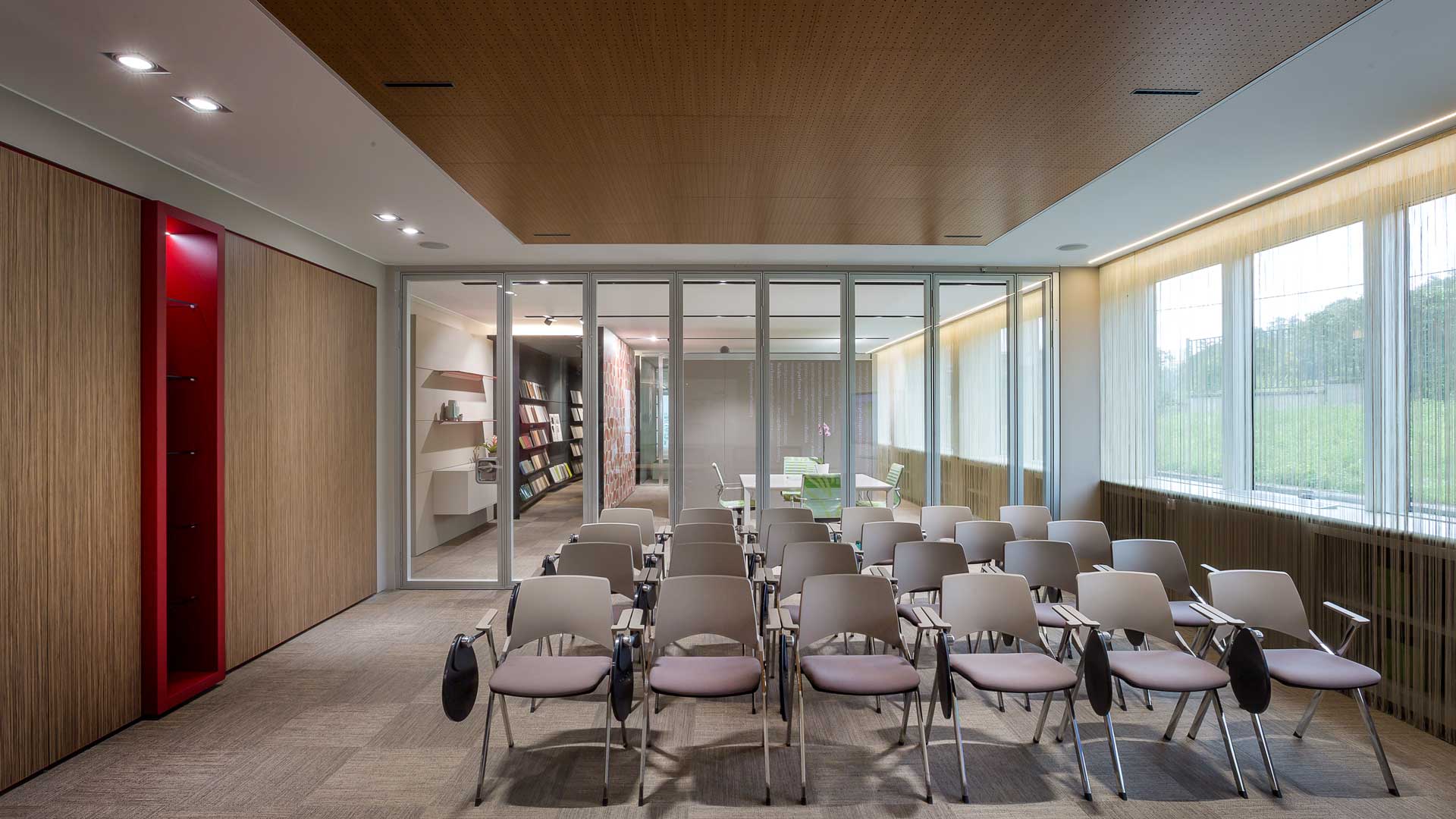
When designing a workspace, much attention is given to flooring and vertical partitions, yet another fundamental element shapes the atmosphere and functionality of an office: the ceiling. More than a mere structural component, an office ceiling—whether fixed or accessible—enhances acoustic performance, conceals mechanical systems, and supports the lighting design.
Far from being just a finishing detail, office ceilings play a crucial role in workspace design:
- They improve thermal and acoustic comfort, ensuring a balanced environment;
- They seamlessly integrate lighting solutions;
- They contribute to the aesthetic identity of the office;
- They discreetly house air conditioning systems, cables, and other technical infrastructure.
Understanding Office Ceilings: Structure and Composition
Office ceilings are installed below the structural slab, either suspended or directly adhered, using a framework that supports the covering panels. The choice of materials depends on the required performance—whether sound insulation, fire resistance, or aesthetic refinement. Thanks to their modular nature, these systems can also be installed in existing buildings, making them a versatile solution for office renovations or layout updates.
The key components defining office ceilings include:
- A metal framework, adaptable to different spatial dimensions;
- Customizable finishes, ranging from minimalist to highly decorative;
- Integration of lighting and air conditioning systems, ensuring a seamless and functional workspace.
Types of Office Ceilings, The Main Solutions
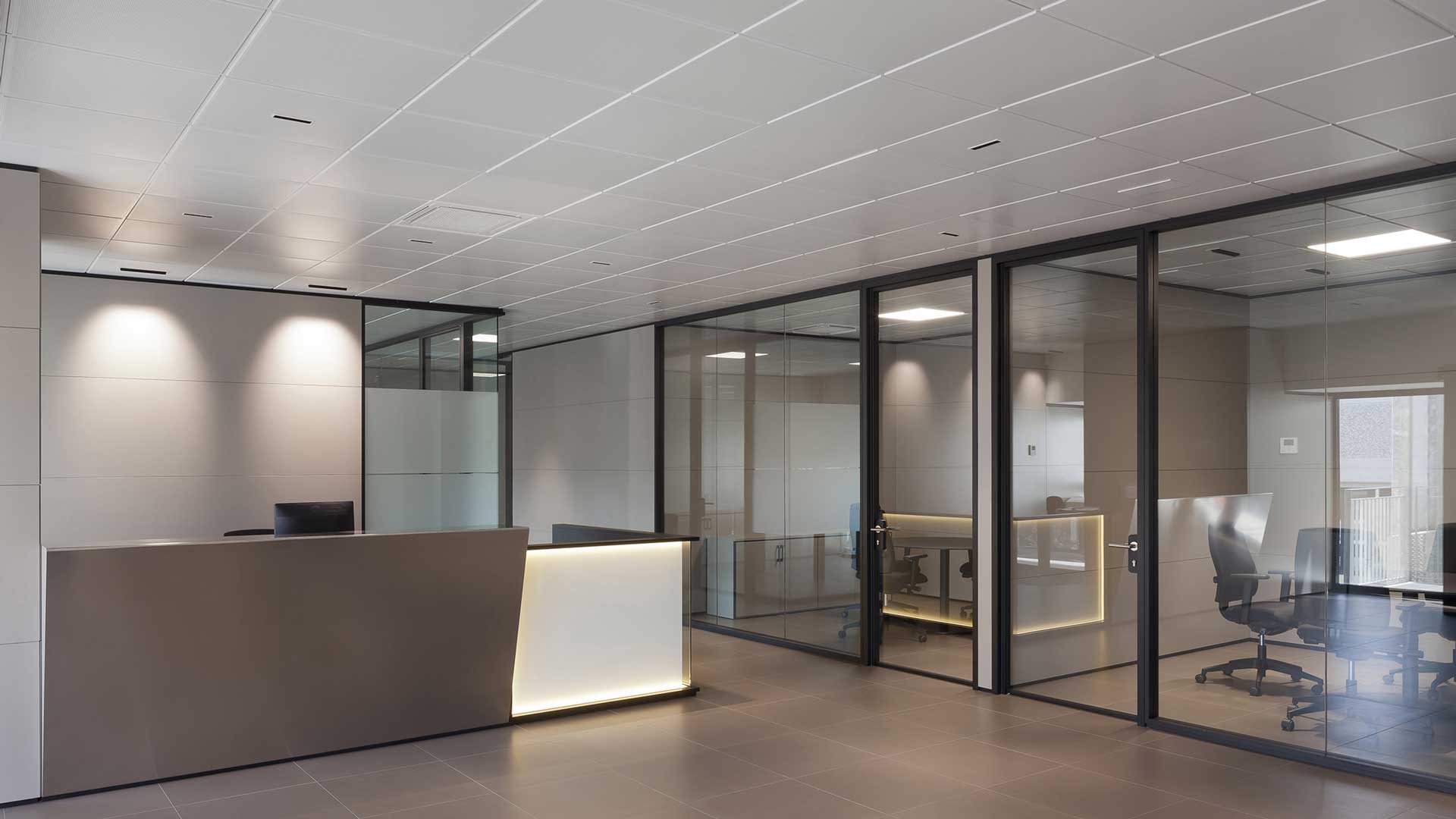
There are three primary types of office ceilings, each designed to meet specific architectural and functional needs:
- Direct-mount ceilings: affixed directly to the structural slab, with finishing elements applied to the framework.
- Suspended ceilings: composed of an adjustable suspension system, allowing for precise height configuration.
- Self-supporting ceilings: ideal for spaces where anchoring to the slab is not possible, using wall-mounted fixing systems.
The underlying structure can be exposed, semi-concealed, or completely hidden, depending on the desired aesthetic effect and the need for periodic accessibility. In accessible ceiling systems, inverted T-bar profiles support panels made of fiber, metal, grating, or wood, ensuring easy maintenance while preserving a sleek, architectural look.
Ceiling Materials: Selecting the Right Option
The choice of materials influences not only the ceiling’s visual impact but also its thermal and acoustic performance. Here are some of the most widely used solutions.
Gypsum Board Ceilings
Gypsum board is the most common material for office ceilings due to its versatility and ease of installation. It can be customized with paints and finishes to seamlessly blend into the office’s design concept.
Metal Ceilings
Modular metal panels offer a contemporary and highly functional solution. They are durable, resistant to moisture and corrosion, and, when treated with antistatic coatings, help maintain a hygienic work environment by preventing bacterial growth and dust accumulation.
Felt Ceilings
For those seeking advanced acoustic performance, felt panels are an exceptional choice. Not only do they provide outstanding sound absorption, but they are also highly customizable in color and texture, adding a distinctive aesthetic touch to any workspace.
Mineral Fiber Ceilings
Made from rock wool, cellulose, and binding materials, mineral fiber ceilings stand out for their moisture resistance, superior acoustic insulation, and fireproof properties. They are ideal for offices requiring the highest safety standards.
Wood Ceilings
For a natural yet sophisticated look, wood ceilings offer a blend of elegance and acoustic efficiency. Available in various finishes and configurations, they can be veneer-coated or designed with modular panel systems for quick and tailored installations.
Transform the Office with the Perfect Ceiling Solution
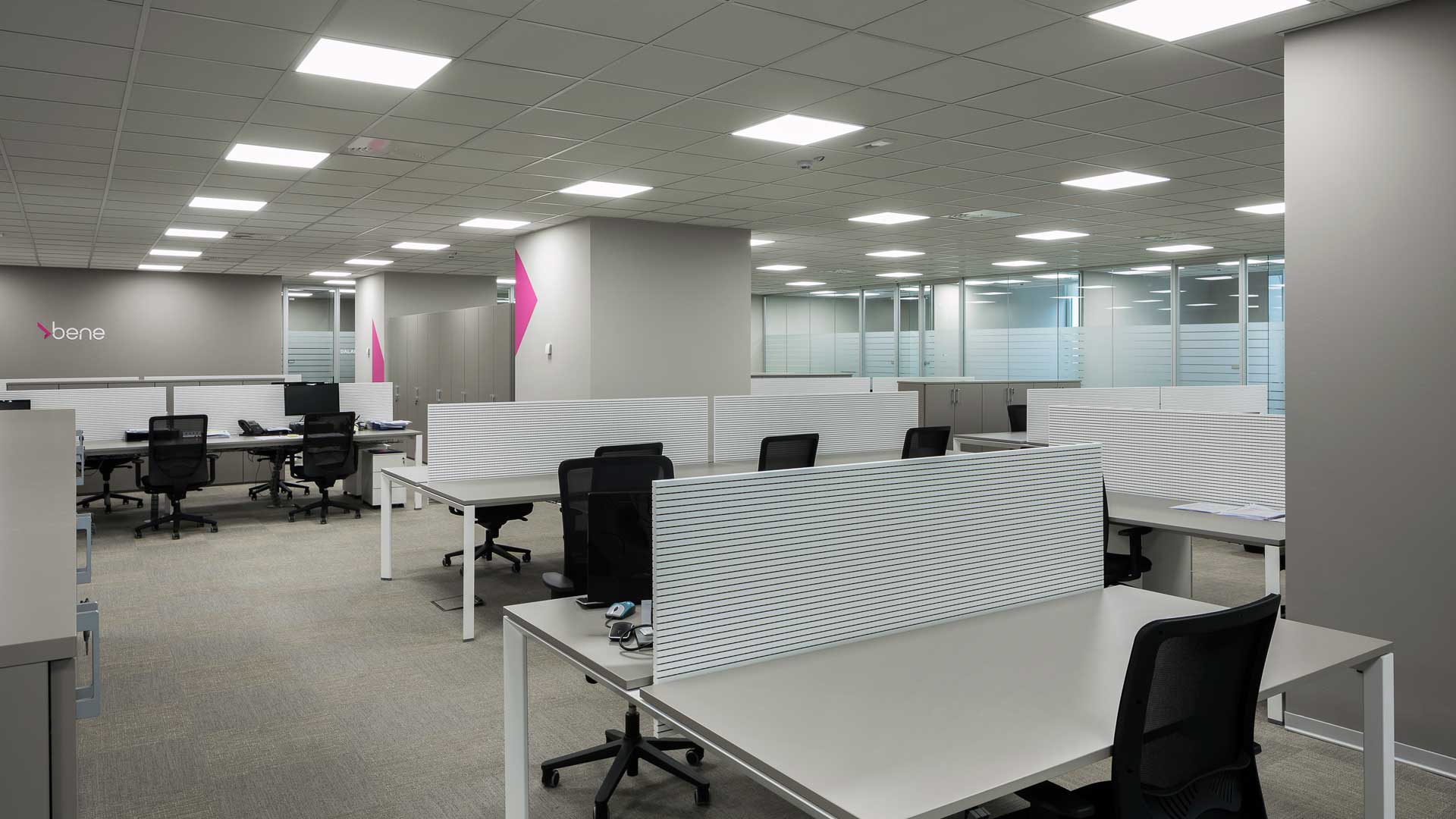
Trust the design specialists at Level Office Landscape to select and integrate the ideal ceiling solution, harmonizing functionality with architectural and interior design elements. Get in touch by filling out the form here or call +39 039 9284831 for a personalized consultation.