
In recent years, the Italian job market has undergone profound transformations. According to ISTAT data, the third quarter of 2024 saw an increase of 117,000 employed individuals compared to the previous quarter, marking a 0.5% growth. This rise was driven mainly by permanent employees (+111,000, +0.7%) and self-employed workers (+43,000, +0.8%), while temporary employment saw a decline (-37,000, -1.3%).
The need for flexible and adaptable environments has become central, as companies seek to accommodate a diverse and evolving workforce. Additionally, the rise of freelance professions calls for spaces that can be easily reconfigured for different activities and collaborations.
In this context, the widespread adoption of agile work models has reshaped the concept of the traditional office, increasing the demand for flexible, wellness-oriented spaces. The integration of technology into professional life, the push toward sustainability, and the focus on employees’ mental health are all shaping design choices significantly.
By 2025, offices will reflect these new priorities—not merely as places of productivity but as dynamic ecosystems where social interactions, comfort, and creativity converge. Office design trends are adapting to these shifts by placing people at the center while embracing new hybrid work models.
The Impact on Office Design
Office design trends for 2025 are centered on flexibility, employee well-being, and seamless technology integration. Modular open-plan layouts, ergonomic furniture, and dedicated relaxation and socialization areas are all strategies that have gained traction in recent years and show no signs of slowing down. Furthermore, sustainability and energy efficiency are key drivers in material and technology choices within office environments.
In summary, the evolving job market is profoundly influencing office design choices, with an increasing emphasis on creating adaptable spaces that meet the changing needs of both businesses and workers.
What to Expect from Office Design in 2025

From biophilic design and hotel-inspired workspaces to rooms dedicated to mental and physical well-being, 2025’s office design trends are all about putting people first.
Workspitality: The “Hotelization” of the Workplace Continues
Workplaces are increasingly resembling high-end hotels. The office, once an obligation, has now become a destination—one that draws from the hospitality industry to offer employees curated experiences tailored to their needs. The term “Workspitality” perfectly encapsulates this hybrid concept, countering the trend of remote work by providing employees with a space they actually want to return to—one designed with contemporary aesthetics and adaptable environments for various activities throughout the day.
With workers becoming accustomed to the comforts of home, offices are embracing interiors that mirror hotel rooms: warm, inviting, and outfitted with natural materials. The modern office is evolving into an ecosystem of flexible spaces, shifting away from an obsession with productivity and toward human interaction. Traditional office design is being reimagined to stay relevant, emphasizing wellness and socialization. Reception areas now double as café-style bars with stools and pendant lighting, kitchenettes transform into bars, and dining spaces resemble full-fledged bistros—encouraging a sense of community.
Office Design Trends 2025, Biophilia: More Nature in Workspaces
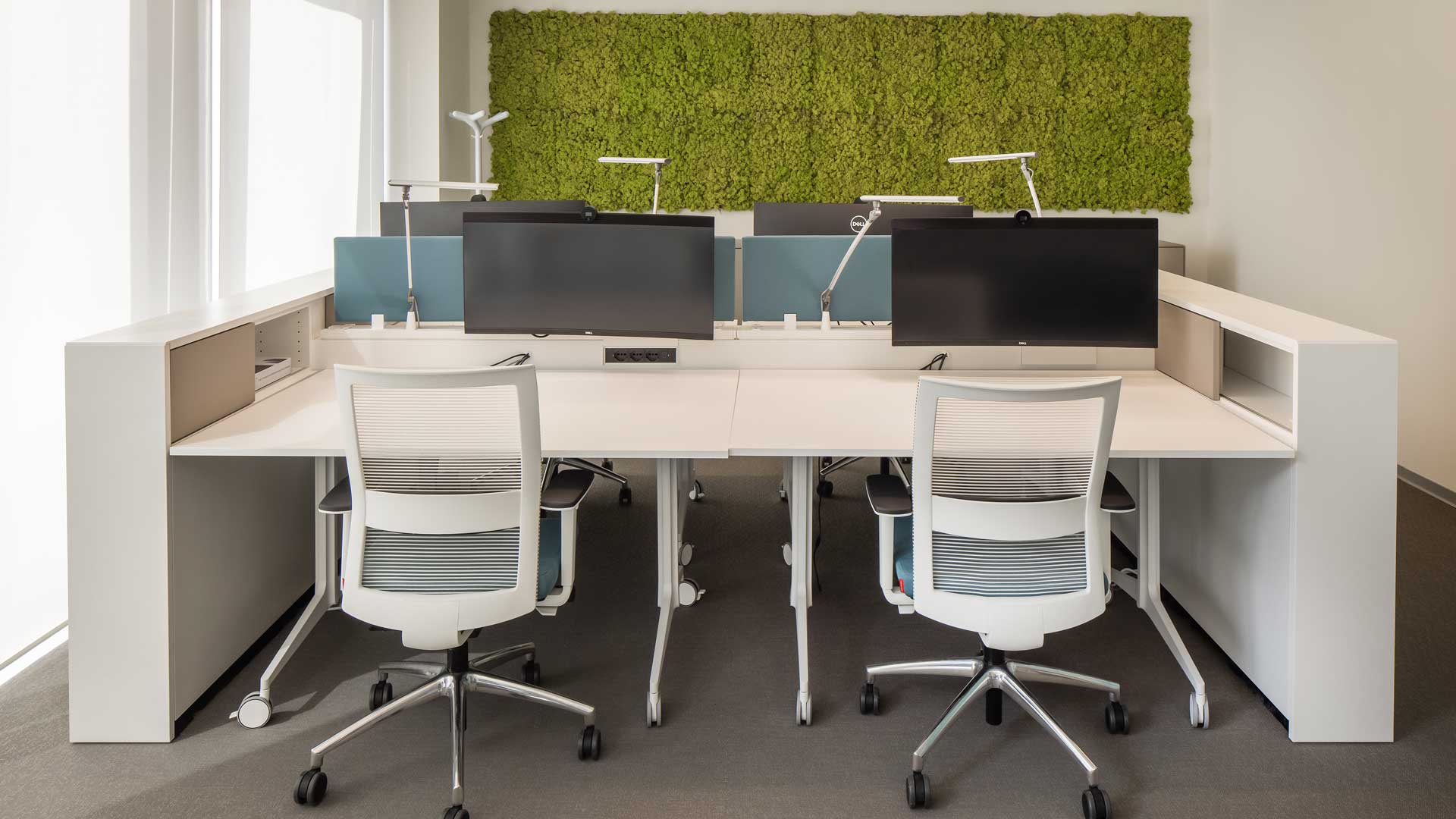
What was once an experimental idea has now become a global trend. Biophilic design, backed by research on the positive effects of nature in work environments, is being embraced by more and more companies. From simple potted plants maintained by professional caretakers to entire green walls covered in evergreens or preserved moss, the options are endless.
Beyond adding greenery, companies are increasingly designing office spaces that blend indoor and outdoor environments. Headquarters with gardens or access to green spaces now feature expansive glass walls, allowing employees to enjoy a “privileged” view throughout the day while benefiting from natural light. Outdoor workspaces and internal gardens are becoming essential elements for boosting both mood and productivity in 2025.
Office Design Trends 2025: Mental and Physical Well-being Take Center Stage
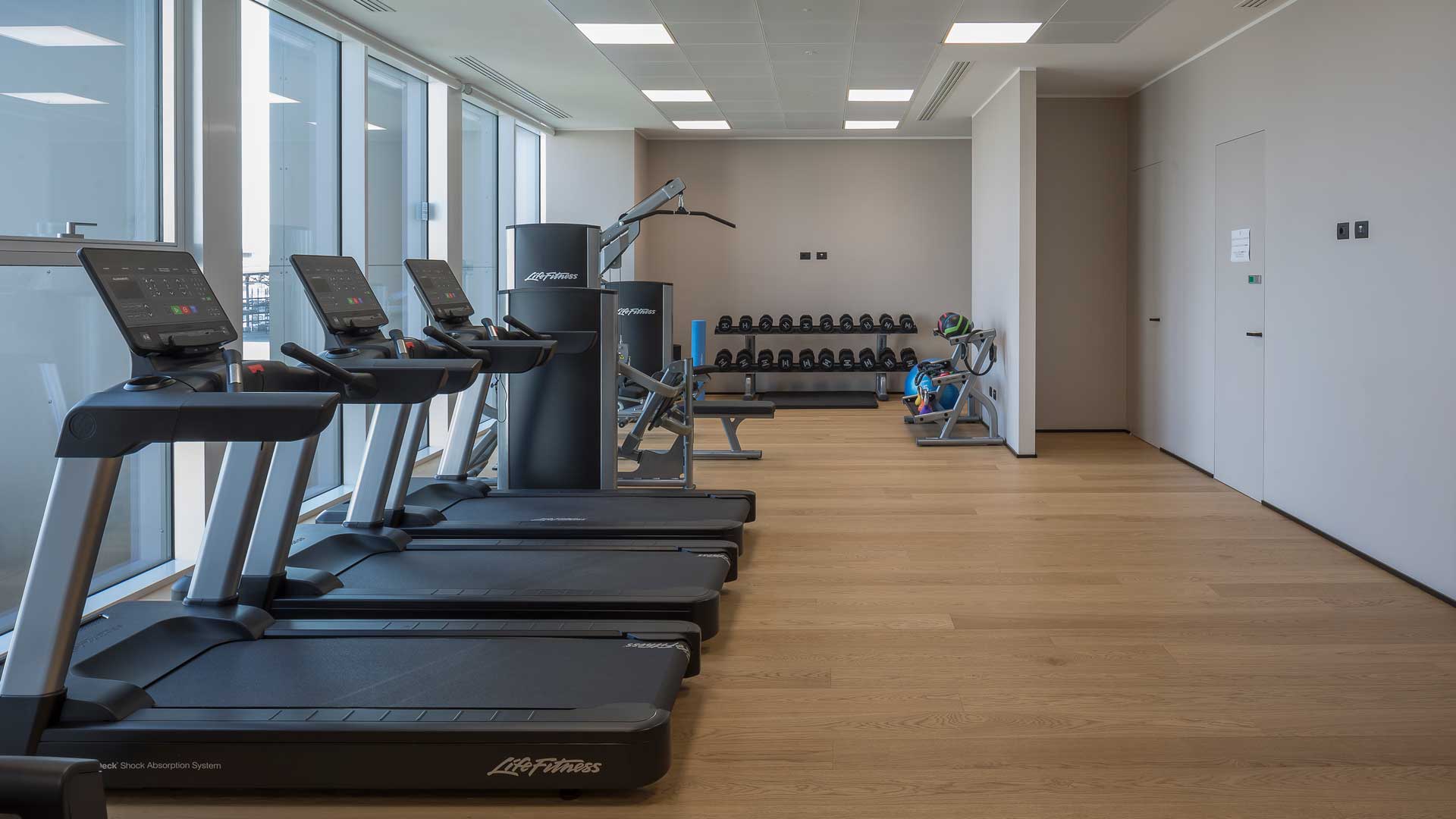
Employee well-being is a top priority in 2025 office design, responding to rising burnout rates—42% of workers in countries like the U.S., Germany, the UK, and Japan report feeling burnt out, with this figure reaching 59% in India, according to Future Forum and McKinsey Health Institute.
Beyond mental health support, companies are introducing additional benefits, such as childcare, eldercare, and even pet care subsidies, to differentiate themselves and attract top talent. Locally driven initiatives that reinvest in the community are also gaining traction.
Workspaces are evolving to promote well-being, integrating relaxation areas such as yoga rooms, meditation spaces, and quiet zones that reduce stress and foster creativity. Meanwhile, demand for lounge areas (+19.3% in 2023, according to WeWork), wellness rooms (+32%), and fitness facilities highlights a growing interest in environments that enhance employees’ quality of life. Additionally, 49% of companies are willing to invest more in buildings that have a demonstrated positive impact on worker health.
To encourage movement and counteract the effects of sedentary lifestyles, office design is becoming increasingly agile—not just in furniture layout but also in facilitating fluid movement throughout the space. Height-adjustable desks, indoor walking paths, and multi-functional areas foster spontaneous interactions and active work styles, promoting both physical and mental well-being.
Seamless Technology Integration
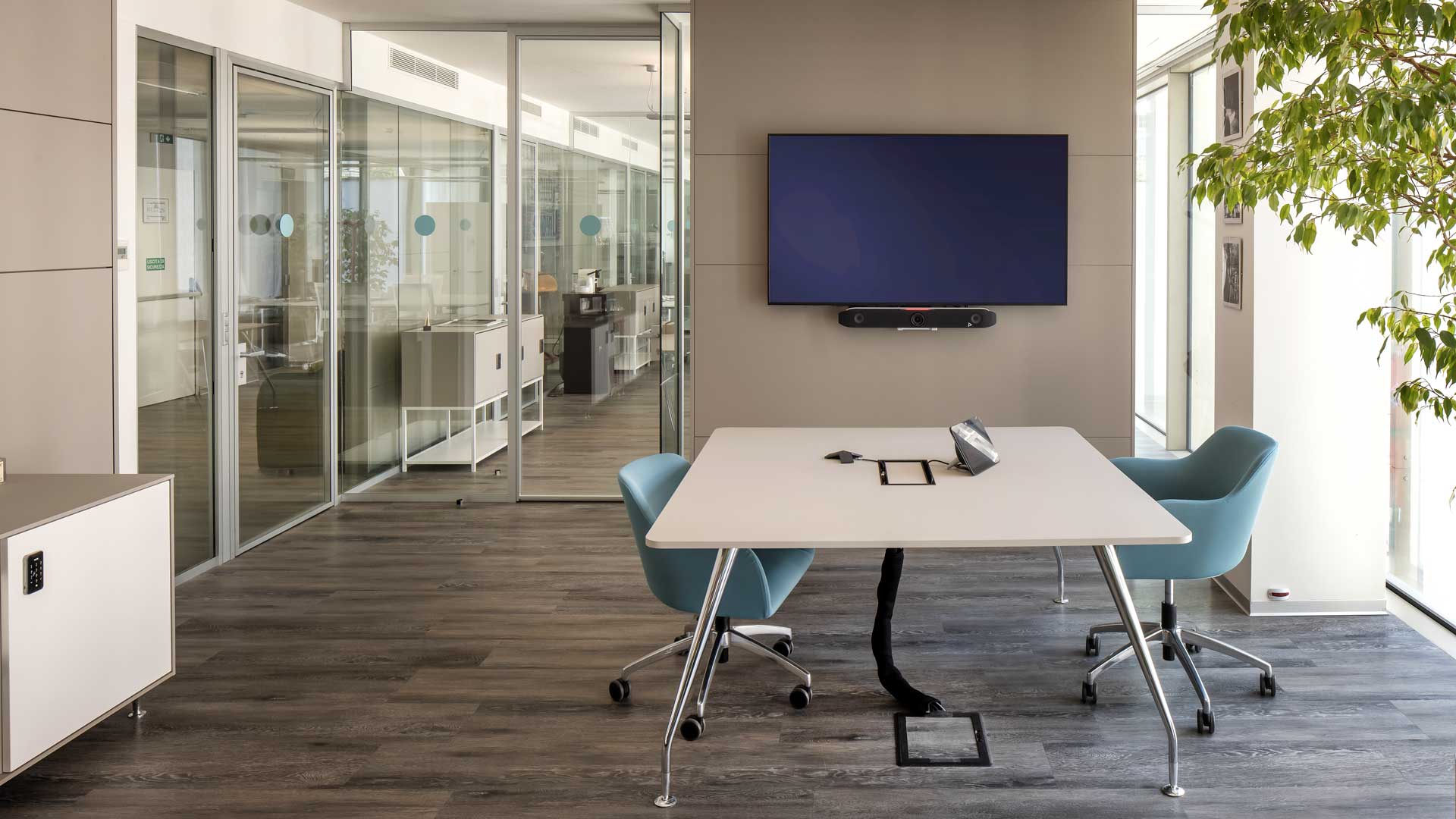
Technology now plays a pivotal role in office design, redefining workplaces into smart, connected environments that enhance employees’ daily experiences. The integration of digital tools streamlines collaboration between in-office and remote teams, with advanced desk booking systems, air quality sensors, and space management platforms becoming standard features.
By 2025, offices will also support immersive technologies like virtual and augmented reality, which are invaluable for advanced training and remote collaboration. However, while AI-driven innovations open new business growth opportunities, they also spark employee concerns about job displacement. It is crucial for employers to leverage AI to improve working conditions rather than merely maximizing profit margins.
A prime example is Modyfi AI technology, which automates repetitive tasks, allowing creative teams to focus on high-impact projects while also enabling a flexible four-day workweek.
Office Design Trends 2025: Inclusive Design and Offices for Everyone

Another key trend for 2025 is inclusive design, which ensures that workspaces are accessible and comfortable for all employees, regardless of age, ability, or personal needs. Adjustable workstations, clear signage, optimal lighting, and designated privacy zones are becoming essential office features.
Beyond physical accessibility, companies are increasingly prioritizing cultural and gender inclusivity. Neutral and customizable spaces reflect a growing awareness of workplace diversity and the importance of creating environments that cater to all team mem