
In today’s labour market, the office has regained weight in decisions around applying for a role, staying with a company, or moving on. For professionals who design workplace environments, quality extends well beyond aesthetics and brings together a set of measurable performances linked to comfort, social interaction, spatial variety, and ease of use. When a space responds to real needs, human resources and real estate align, and talent confirms its sense of belonging to the organisation.
What Retention and Attractiveness Data Reveal to Designers
The Gensler Global Workplace Survey 2024, based on interviews with more than 16,000 workers across 15 countries, highlights a clear connection between the quality of the office experience and employee retention. 97 per cent of the most engaged employees state they expect to remain with their company the following year, compared with 53 per cent of those who feel less engaged by their headquarters environment. The same study shows that workplaces featuring relaxation areas, bistros, and spaces that support both focus work and social interaction are the most appreciated by employees.
Another metric with direct implications for design is the Leesman Index, which measures how workers experience their spaces. Between 2019 and 2024, the global average score for office experience rose from 64.3 to 69.5, while the experience of working from home in 2024 remained significantly higher at 79.5. For designers, the message is operational: the office gains value when it narrows the gap in comfort, control, and ease of use compared to the domestic environment, while offering social interaction, learning, and exchange in return.
Retention and Attractiveness: The Relationship Between Leadership and Good Design
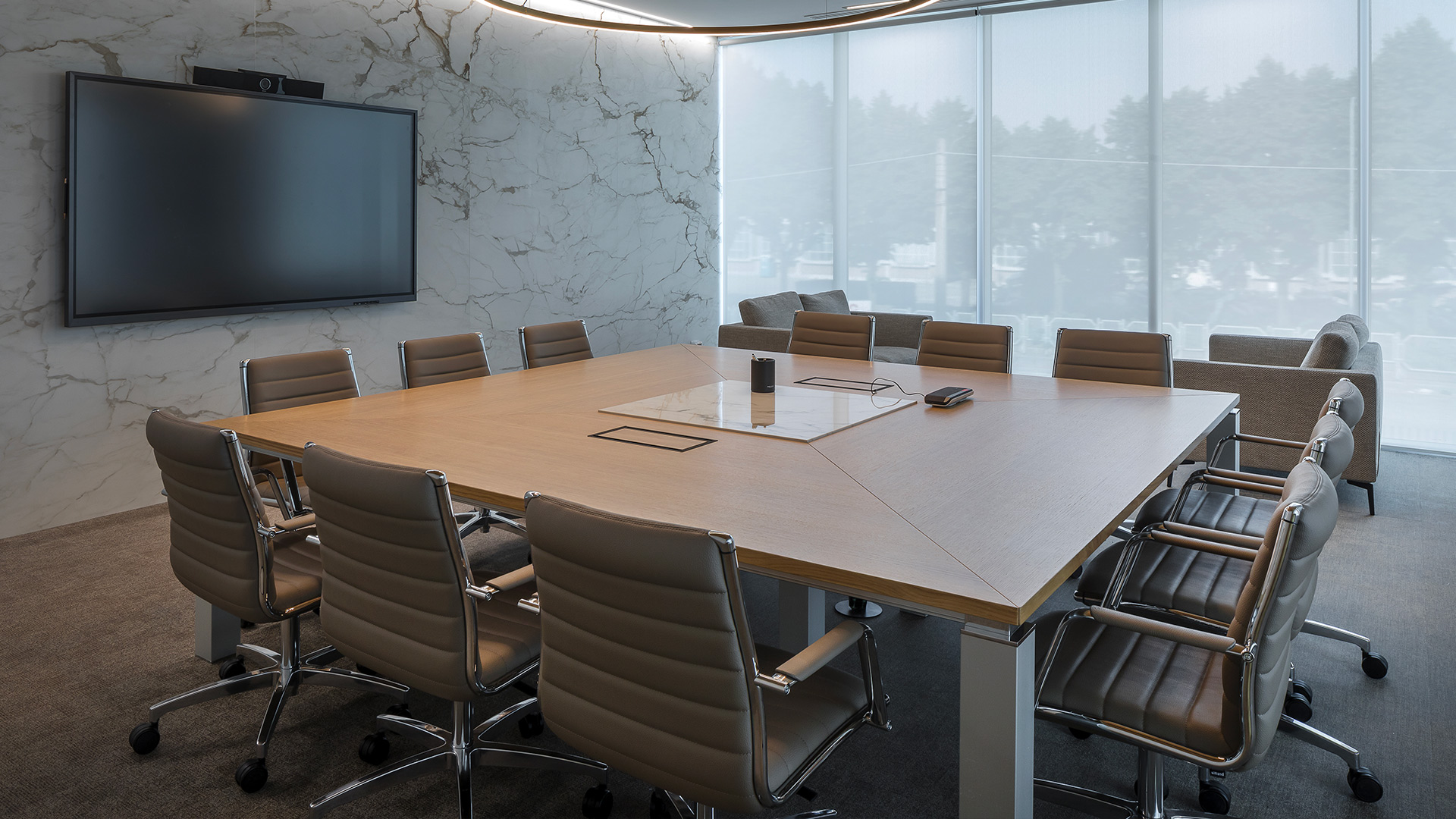
The State of the Global Workplace 2025 report by Gallup points out that global workforce engagement reached critical levels in 2024, with an estimated economic impact of hundreds of billions of euros in losses linked to employee disengagement. For companies and designers alike, this underlines how spatial quality can support healthier routines, enabling moments of focus, quick exchanges, and restorative breaks, while reinforcing effective leadership.
What Defines a Quality Office Today
For workspaces designed to attract and retain talent, quality aligns with at least four key project performances.
Clarity of Flows

Entrances and reception areas should convey order and orientation, with intuitive paths connecting reception desks, lounges, and guest-friendly meeting areas, reducing cognitive friction from the very first minutes of a visit. A bespoke reception counter combined with materials consistent with the corporate image represents the first step towards an effective result.
Ecosystems of Spaces

An effective office combines open-plan layouts with more contained environments. Quiet rooms for individual activities, phone booths for calls, meeting rooms of varying sizes, and informal areas that encourage spontaneous encounters and collaboration are just a few examples. The Planet Plus and Planilux Plus partition systems by Level Office Landscape act as architectural elements that discreetly separate spaces when needed, while allowing transparency where visual dialogue is required.
Technical Wellbeing

Office performance depends on acoustics, lighting, air quality, and the ability to personalise the workstation. Together, these elements contribute to employee wellbeing and therefore need to be easily monitored and adjustable. Technology today is increasingly invisible yet highly efficient. Adjustable worktop heights, such as those offered by the Alaska desk by Level Office Landscape, along with individual control over environmental conditions, make a tangible difference in everyday experience.
Services and Context
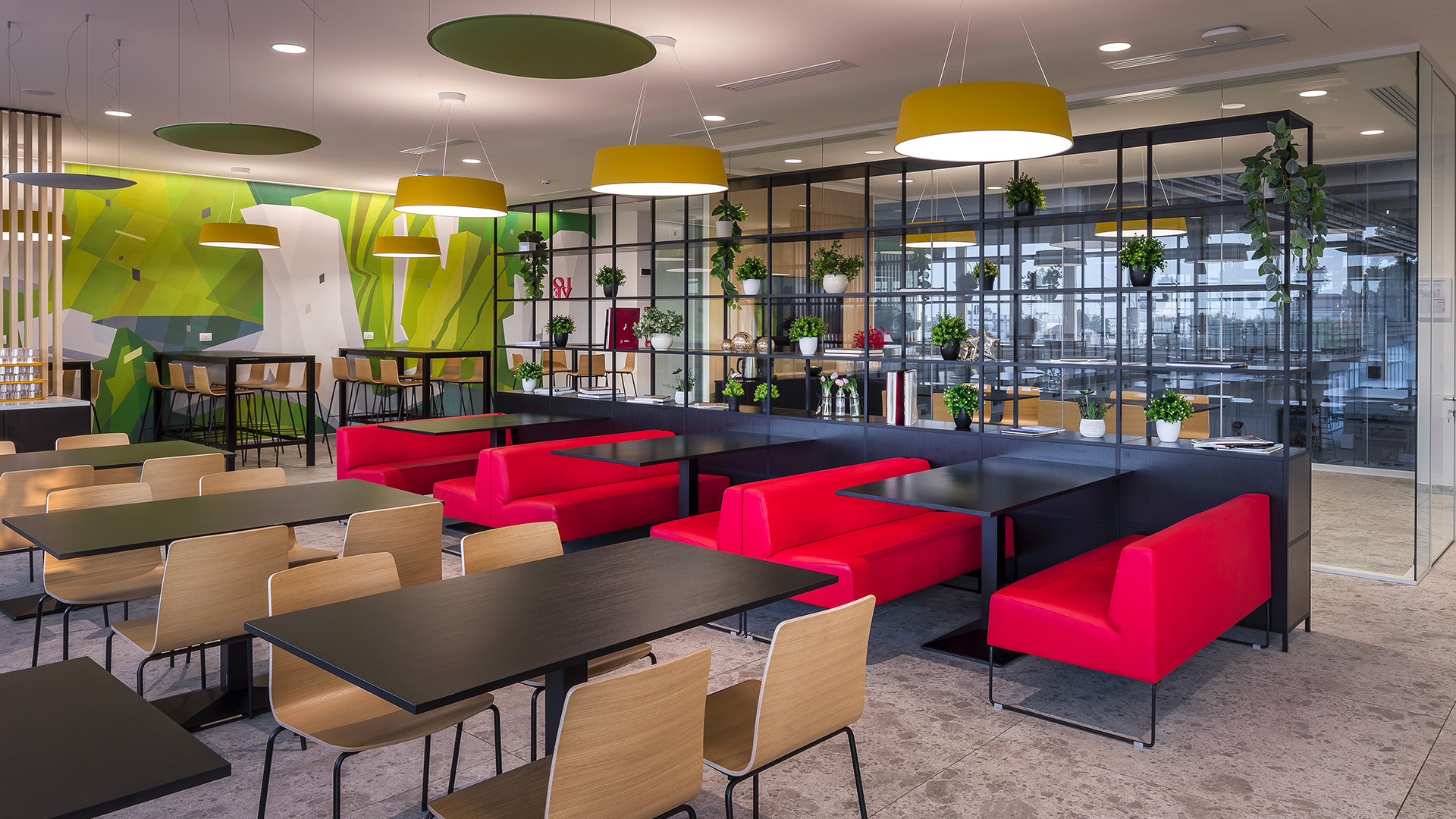
Internal amenities such as breakout areas and wellness spaces increase the desire to return to the office, making time spent on site more efficient and allowing workers to enjoy restorative pauses. Bespoke kitchenette solutions, such as those proposed by Level Office Landscape, enhance the lunch break with a high level of comfort, while corporate gyms and spaces dedicated to yoga and meditation sessions are increasingly in demand.
From Quality Office to Concrete Project: Translating Retention and Attractiveness

To design a contemporary office suited to activity-based working, with areas dedicated to social interaction and spaces reserved for focused tasks, three principles suggested by Level Office Landscape are worth keeping in mind.
- Map space usage: classify employee activities such as focus, interaction, and socialisation, and assign dedicated environments to each, building a flexible layout.
- Define measurable parameters: setting acoustic targets, lighting levels, proportions of enclosed and open spaces, and thermal comfort metrics provides a solid base for simulation and post-occupancy monitoring.
- Avoid static solutions: flexible options using partition systems and reconfigurable solutions such as the Ever Evolving System by Level, combined with advanced technologies, enhance perceived autonomy and support activity-based working.
A quality office functions like a well-designed product, integrating performance and usability, reducing friction, and encouraging team building. When everyday experience becomes natural and functional, retention and attractiveness move beyond slogans and emerge as direct outcomes of design quality.